Weichai vs. Yuchai: Which Chinese diesel engine is right for your truck or bus? This guide compares their applications, performance considerations, maintenance requirements, and suitability for different operating conditions.
In China’s diesel engine industry, there is a long-standing saying: “Weichai in the North, Yuchai in the South.”
For decades, Weichai has been closely associated with heavy-duty trucks, construction machinery, and demanding industrial applications. Yuchai, meanwhile, has established a strong presence in passenger buses, commercial vehicles, agricultural machinery, marine engines, and power generation.
But does this mean Weichai is better for heavy-duty work and Yuchai is better for passenger transportation?
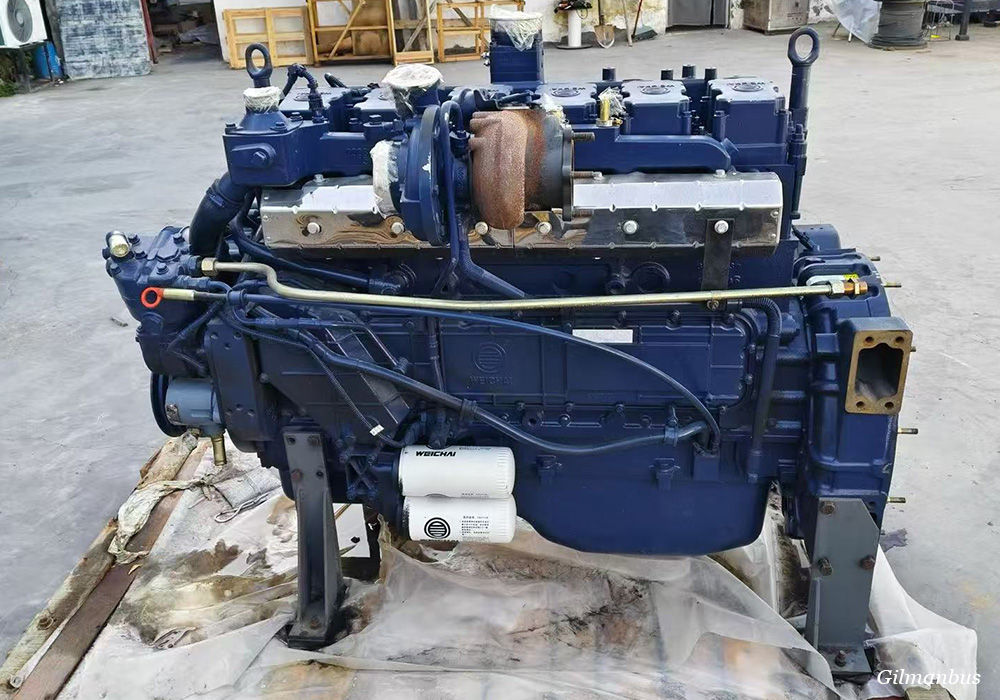
Not necessarily. Both manufacturers offer a broad range of engines, and their products serve many of the same markets. The traditional saying reflects China’s industrial history, regional customer preferences, and established supply chains rather than a strict technical division.
For international buyers looking for Chinese trucks and buses, understanding these differences can help you choose a vehicle that meets your operational requirements and budget.
1. Weichai and Yuchai: An Overview
Weichai: A Major Player in Heavy-Duty Power
Weichai is headquartered in Weifang, Shandong Province, China. It is a major powertrain manufacturer with products covering commercial vehicles, construction machinery, agricultural equipment, marine applications, and power generation.
Its diesel engine portfolio includes solutions for tractor trucks, cargo trucks, dump trucks, buses, and specialized vehicles. Different models cover a wide range of power outputs and emissions standards.
For buyers operating heavy-duty vehicles, Weichai is worth considering when engine output, torque characteristics, and compatibility with the vehicle’s drivetrain are important factors.
Official website: https://en.weichai.com/
Yuchai: A Diverse Engine Portfolio
Yuchai is headquartered in Yulin, Guangxi Zhuang Autonomous Region, in southern China. Founded in 1951, the company has developed an extensive portfolio of engines and power solutions.
Its products serve light-, medium-, and heavy-duty trucks, passenger buses, agricultural machinery, construction equipment, marine applications, and generator sets.
Yuchai has a particularly established presence in China’s conventional bus market, alongside its broader commercial and industrial engine business.
For international buyers, Yuchai offers a range of engine options worth evaluating for passenger transportation, logistics, and other commercial applications.
Official website: https://en.yuchai.com/
2. Why Has Weichai Built a Strong Reputation in Heavy-Duty Applications?
The traditional association between Weichai and northern China’s heavy industry has several historical and commercial explanations.
2.1 Experience in Demanding Working Conditions
Heavy-duty trucks used in mining, construction, and long-distance freight transportation may operate under high loads for extended periods.
In these applications, buyers need to consider maximum torque, power delivery, cooling performance, transmission matching, and durability under the intended operating conditions.
Weichai offers engine models designed for heavy-duty trucks and construction equipment. However, actual performance depends on the specific engine configuration and the vehicle in which it is installed.
When choosing a truck for mining or construction, do not compare horsepower alone. Maximum torque, transmission ratios, axle configuration, vehicle weight, and maintenance history also matter.
2.2 Established Commercial Vehicle Partnerships
China’s commercial vehicle industry has developed close relationships among engine manufacturers, truck manufacturers, component suppliers, and service providers.
Weichai is part of a broader industrial group with businesses and partnerships across commercial vehicles and equipment.
For buyers, an established powertrain ecosystem can be valuable because vehicle integration, parts supply, and technical support all influence operating costs.
When comparing two trucks, check the availability of replacement parts for the complete vehicle, not just the engine.
2.3 Spare Parts and Maintenance Familiarity
In some regions of China, long-standing familiarity with Weichai engines has helped establish repair expertise and parts distribution networks.
The same principle applies internationally: an engine can be a practical choice when local mechanics know how to service it and essential replacement parts are readily available.
For overseas buyers, local support should be verified rather than assumed. Availability can vary considerably from one country to another.
2.4 Cold-Weather Operation
Vehicles operating in northern China, Central Asia, or other cold regions may face difficult starting conditions and prolonged exposure to low temperatures.
Cold-weather performance depends on the engine specification, starting system, battery condition, lubricants, fuel quality, and vehicle maintenance.
Some engine configurations may be better equipped for severe cold than others. Buyers operating in freezing conditions should confirm the manufacturer’s minimum operating temperature and recommended cold-start equipment for the exact engine model.
3. Why Is Yuchai Popular in Bus and Commercial Vehicle Applications?
Yuchai’s reputation in southern China is closely associated with the region’s transportation and industrial markets, including passenger buses, logistics, agriculture, and power generation.
3.1 A Strong Presence in the Bus Market
Yuchai offers diesel and gas engines for different bus sizes and applications, including city buses and highway coaches.
For passenger transportation operators, engine selection involves more than maximum power. Fuel consumption, passenger capacity, driving conditions, noise and vibration, maintenance intervals, and parts availability all influence the overall cost of operation.
Yuchai is an important option for buyers looking for Chinese buses, but Weichai also offers engines for bus applications.
The best choice depends on the specific bus model and the requirements of the operator.
3.2 Fuel Economy and Driving Comfort
Fuel costs are a major operating expense for bus companies and logistics businesses.
However, it is not accurate to say that every Yuchai engine consumes less fuel than every Weichai engine. Fuel economy depends on the engine model, vehicle design, load, driving cycle, transmission, and maintenance condition.
For buses running frequent urban routes, low-speed performance and stop-start efficiency may be particularly important. For highway coaches, sustained operating efficiency and appropriate power output may matter more.
When possible, compare fuel consumption data from vehicles operating under similar conditions.
3.3 Diverse Industrial Applications
Yuchai’s product portfolio extends beyond road vehicles. Its engines are also used in agricultural machinery, marine applications, construction equipment, and generator sets.
This broad range gives buyers several categories of products to consider when sourcing Chinese machinery and commercial vehicles.
Nevertheless, engines designed for different applications are not necessarily interchangeable. Always confirm the engine’s intended use and technical specifications before purchase.
3.4 Maintenance and Local Service Support
In southern China, Yuchai’s established industrial presence has contributed to its familiarity among some vehicle operators and repair businesses.
For international buyers, the practical question is whether Yuchai parts, trained mechanics, and technical assistance are available in the destination market.
The same evaluation should be applied to Weichai. Neither brand should automatically be assumed to have better overseas support in every country.
4. Weichai vs. Yuchai: A Side-by-Side Comparison
| Comparison factor | Weichai | Yuchai |
|---|---|---|
| Headquarters | Weifang, Shandong | Yulin, Guangxi |
| Major applications | Trucks, buses, construction machinery, agriculture, power generation | Trucks, buses, construction machinery, agriculture, marine engines, power generation |
| Heavy-duty trucks | Extensive engine portfolio | Extensive engine portfolio |
| Passenger buses | Offers engines for city buses and highway coaches | Established presence in China’s conventional bus market |
| Fuel economy | Depends on engine model and operating conditions | Depends on engine model and operating conditions |
| Cold-weather operation | Verify the specification of the selected engine | Verify the specification of the selected engine |
| Maintenance costs | Depend on parts prices, labor, and vehicle condition | Depend on parts prices, labor, and vehicle condition |
| Overseas suitability | Depends on local service and parts availability | Depends on local service and parts availability |
The key takeaway: Weichai and Yuchai have overlapping product ranges. Neither brand is automatically superior in every application. Compare specific engine models and complete vehicles before making a purchasing decision.
5. Which Engine Should You Choose?
The most suitable engine depends on how you intend to use the vehicle and where it will operate.
For Heavy-Duty Tractor Trucks
If you need a tractor truck for long-distance freight, heavy loads, or demanding routes, start by comparing engine power, maximum torque, transmission ratios, axle configuration, and fuel consumption.
Weichai is a natural candidate to include in your shortlist, but suitable Yuchai-powered trucks should not be excluded without comparing their actual specifications.
For Dump Trucks and Construction Work
For dump trucks, mining operations, and construction sites, pay particular attention to torque delivery, cooling performance, air filtration, durability, and maintenance accessibility.
The engine must be matched to the truck’s payload, transmission, axle configuration, and working environment.
For City Buses and Highway Coaches
If you operate a passenger transport business, compare the complete bus configuration, including seating capacity, engine model, fuel consumption, air-conditioning load, and maintenance requirements.
Both Weichai and Yuchai offer engines for bus applications. The availability of suitable spare parts and experienced mechanics in your country can be an important deciding factor.
For Agricultural Machinery and Generator Sets
For agricultural equipment, evaluate the engine’s rated power, torque characteristics, operating hours, and suitability for the equipment.
For generator sets, compare continuous and standby power ratings, fuel consumption at different loads, maintenance requirements, and compatibility with local electrical standards.
Do not assume that an engine intended for a truck is automatically suitable for an industrial or generator application.
For Buyers in Africa, Central Asia, and Other International Markets
If you are importing a used Chinese truck or bus, pay special attention to:
- Local diesel fuel quality and the engine’s fuel requirements
- Emissions standards and import regulations
- Availability of spare parts and diagnostic equipment
- Local mechanic experience with the exact engine model
- Road conditions, climate, and expected operating loads
- The vehicle’s actual condition and maintenance history
For many overseas operators, the engine that is easiest and most economical to maintain locally may be a better long-term choice than one selected on brand reputation alone.
6. Five Things to Check Before Buying a Used Chinese Truck or Bus
A good engine brand does not guarantee that an individual used vehicle is in good condition. Before placing an order, follow these five steps.
1. Confirm the engine model.
Ask for the exact engine model code, rated power, maximum torque, and emissions standard. Request a photograph of the engine identification plate when possible.
2. Inspect the engine’s condition.
Check cold-start performance, unusual noises, exhaust smoke, oil leaks, coolant condition, and signs of overheating. Diagnostic checks may also be appropriate.
3. Review maintenance history.
Ask about previous repairs, engine overhauls, oil changes, and any known mechanical problems. For higher-value purchases, consider an independent inspection.
4. Verify local parts availability.
Check whether essential filters, sensors, injectors, turbochargers, and other model-specific components can be sourced in your country.
5. Calculate total operating costs.
Compare purchase price, shipping, import duties, fuel consumption, routine maintenance, replacement parts, and potential downtime.
These checks can help you avoid costly surprises and choose a vehicle that is better suited to your business.
7. Frequently Asked Questions
Is Weichai better than Yuchai?
Neither brand is universally better. Weichai has a broad portfolio of heavy-duty power solutions, while Yuchai has an established presence in buses and many other engine applications. The right choice depends on the specific models being compared and your operating requirements.
Which engine is more fuel-efficient?
Fuel economy varies by engine model, vehicle configuration, load, driving conditions, and maintenance. Request comparable fuel consumption data instead of relying on brand-wide claims.
Are Weichai and Yuchai spare parts interchangeable?
Not necessarily. Parts compatibility depends on the exact engine model and component specifications. Confirm part numbers before ordering replacements.
Which engine is better for African markets?
There is no single answer for the entire African market. Conditions differ between countries and even between individual operators. Consider fuel specifications, emissions requirements, local repair expertise, spare parts availability, and the intended vehicle application.
Can I buy a used Chinese bus with either engine?
Yes. Both manufacturers supply engines for bus applications. The available engine depends on the bus model, production year, and configuration. Confirm the actual engine fitted to the vehicle rather than relying on a general brand description.
What is more important: engine brand or vehicle condition?
Both matter, but for a used vehicle, actual mechanical condition is critical. A well-maintained vehicle with a suitable engine can be a better investment than one with a more prestigious specification but a poor maintenance history.
8. Final Thoughts: Choose the Engine That Fits Your Business
“Weichai in the North, Yuchai in the South” is a useful introduction to China’s diesel engine industry. It reflects historical market preferences and the development of regional industrial ecosystems.
But today’s engine market is more diverse than this traditional saying suggests. Both manufacturers offer products for multiple commercial and industrial applications.
For international buyers, the best decision comes from comparing the exact engine specification, vehicle condition, fuel economy, emissions compliance, maintenance costs, and local parts availability.
Looking for used Chinese trucks or buses?
At Gilman, we help international buyers explore used Chinese commercial vehicles, including buses from brands such as Yutong, Zhongtong, King Long, and Higer.
Tell us your destination country, preferred vehicle type, seating capacity or payload, and budget. Our team can help you identify suitable vehicles and provide available specifications and quotations.
Contact Gilman to discuss your vehicle requirements and find the right solution for your business.